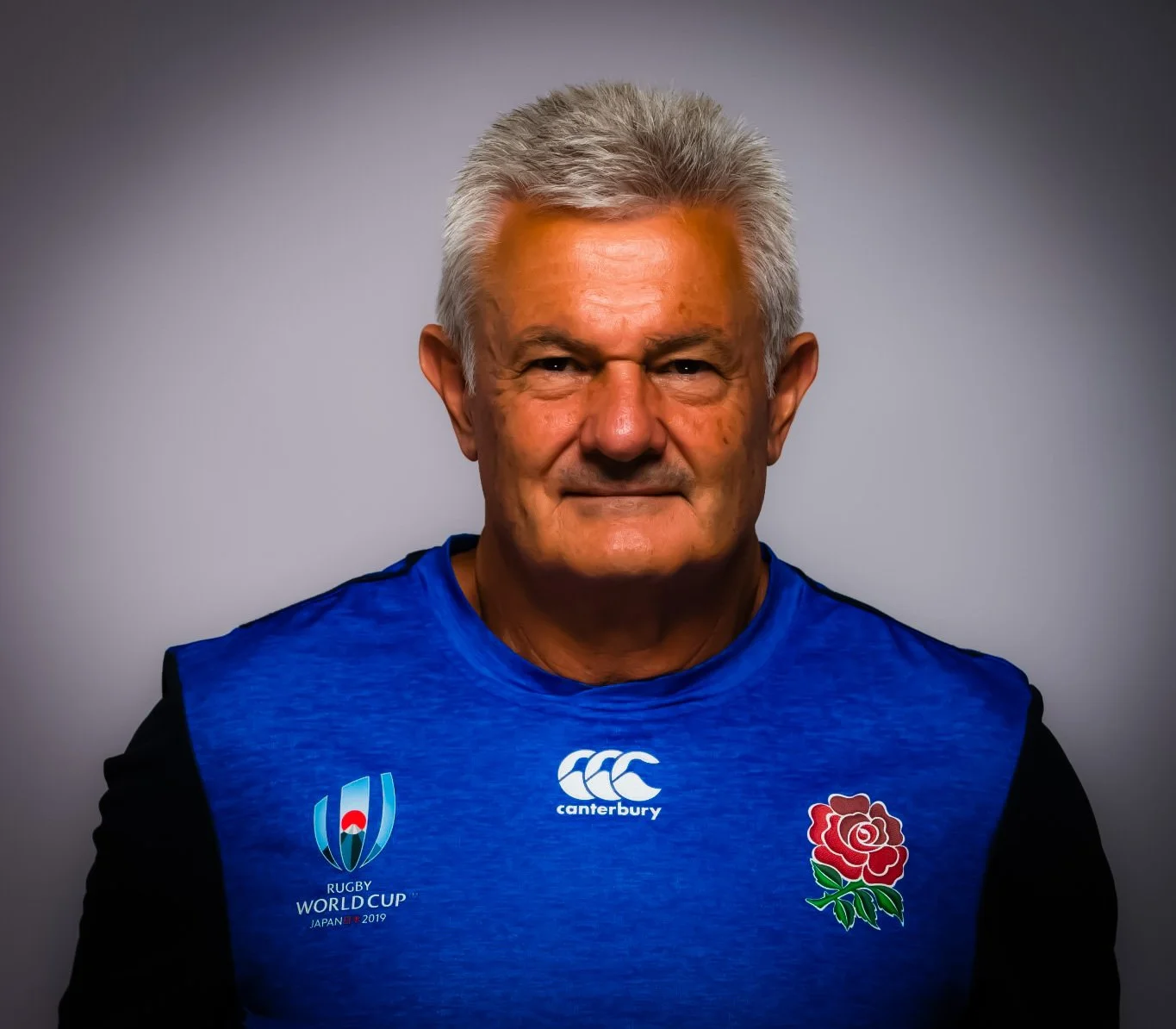
Episode #032
Neil Craig
‘A game never won’
Episode #032
Neil Craig
‘A game never won’
Listen and Subscribe

A game never won
"Expectation is the root of all heartache." — Shakespeare (via Neil Craig)
"If you want to be liked, you probably haven't got the courage to be disliked."
Neil Craig is the first person we've brought back ‘into the arena’. There are good reasons for that.
He's 70 years of age, actively coaching leaders at the Australian Institute of Sport (AIS), and still the most curious person in any room he walks into. He's become a wonderful mentor for me, and in becoming that, I've learnt that the currency of our work, the currency of being in the arena, is the conversations we get to have. This was one of those conversations.
For Neil, leadership is a game never won. Not a failure. A practice. Always evolving, always demanding more of you than it did yesterday.
The most dangerous word
"It's nearly the most dangerous word in the sporting industry at the highest level. Expectation. Because it can undo you really quickly."
Neil doesn't use the word expectation. He uses goal. Not to water it down. To survive and still perform. Because the external expectation machine never stops. The media's role is to create expectation, create pressure. "That's their role. And they do it really well."
The danger is subtle. "All of a sudden you can find yourself making decisions based on wanting to fit in with what the supporter group wants." Your thinking changes. Your courage shrinks.
Internal expectations, the ones tied to values, standards, processes, those are worth holding. Two questions matter:
Are we on track?
Are we on the right track?
You're not the coach we appointed
"I had a CEO say to me, 'You're not the coach that we appointed.' When I took time to step away and think it through, there's always that element of truth."
Neil, coaching at AFL level, under pressure, behaviours changing. And a CEO brave enough to walk in and say it. Not when things were calm. When things were hard.
"The feedback might not be exactly right, but it's certainly not wrong."
That's the exchange of expectations. Not just what the coach expects of the players. What do you expect of each other under pressure?
Neale Daniher knew it. In a job interview for the Melbourne Football Club senior coaching role, President Joe Gutnick asked what he'd do when we’d lost five straight. Neale’s response:
"Don't worry about me, Joe. What are you going to do?"
If Neil Craig had his time again, a critical friend would have been the priority. Someone who, six weeks before the CEO walked in, might have said: "You okay? Your behaviour is changing. The way you spoke to that player, I haven't heard that before." Nip it in the bud before the blind spot becomes the culture.
The environment creates the effort
"Any coach that says they don't have to coach effort, good luck."
Shouldn't high-performing people just try hard? Neil's answer: effort is a product of the environment. Valued. Improving. Agency. Those conditions produce effort.
"I've seen some of the most effortful athletes be drained. And I've probably done it to them."
Early in his career, he ended a player's career. Not through selection. Through the environment he created. "He said, 'I don't want to play here anymore.' I coached effort out of him."
Data, not destiny. He changed. But the lesson stayed.
Too much on the board
"Just give us the three key points. We don't need all this stuff."
Coaching Adelaide, the team is struggling. Neil received some feedback from his players, skipper Mark Ricciuto, and team leaders Simon Goodwin and Andrew McLeod. They showed him an image, him at a whiteboard covered in information. It was like a scene out of the movie 'A Beautiful Mind'.
The leaders asked for three ideas in three sentences. Nothing more. At the next team meeting, Neil responded, reducing the message to three points, each in a single word.
He looked up at Andrew McLeod in the coaches’ room, who nodded and gave him the thumbs up.
The team started winning.
Before that feedback, the coaching group's diagnosis was that the players had an attitude problem. "In actual fact, I was the problem. Too much information. They didn't know what I wanted them to do."
That's the coachability question. Are you up for growth? Are you up for change? Are you up for feedback, and then doing something about it? Chris Fagan stands in front of his playing group three times a year and asks: tell me what to keep, what to add, what to stop. First man up. "If I'm going to go down that path, I need to be first up."
Players crave consistency from their leader. "They want high demand. But they also want high support."
Are you thinking about what you're doing?
"Jack Oatey asked me a question: 'Are you thinking about what you're doing?' And I wasn't. I was busy."
The legendary coach changed how Neil coaches. He was designing drills but not thinking about what they were for. Busy, not purposeful.
"A lot of what we've been talking about hasn't just come naturally for me. I've had to think about it."
That's the practice of reflection. Where in your week do you actually have time to think? Because without it, you end up trying to please people. And the people you lead — "they smell it from ten kilometres away."
Neil Craig at 70. Still thinking. Still learning. Still coaching. A game never won. And he wouldn't have it any other way.
Notebook ready,
Play on!

Cameron Schwab
Video Shorts - Some key lessons from the podcast

Leadership is the difference maker
To embrace the expectations of your role, welcome the responsibilities and pressures as a privilege, a right you have earned, and be energised by the opportunities they provide.
Any coach that says they don't have to coach effort - good luck.
Neil Craig